Are your pixels protected?

What if your favorite character never boarded that train or chose not to die? Imagine DDLJ with Raj watching Simran vanish into the distance, or Jab We Met if Geet stuck to schedule and never detoured into destiny. In this new world, iconic moments aren’t sacred, they’re remixable. Welcome to AI’s playground, where stories evolve, rebel, and rewrite themselves at the click of a code. 

Raanjhanaa’s Alternate Ending: Art vs. Algorithm 

Eros International, the official producer and primary rights holder of “Raanjhanaa,” recently sparked debate by releasing an AI-generated alternate ending for the film, allowing the protagonist to survive instead of following the original tragic arc. The move drew immediate criticism by the director Anand L. Rai calling it a betrayal of his creative vision, and Dhanush firmly objected, stating this was not the film or climax he had agreed to twelve years ago. This has clearly sparked a stir and quickly landed itself as a prime-time debate topic. At stake: who gets to rewrite the story when machines join the writers’ room?

 Copyright Law: Who Holds the Pen? 

Under Indian copyright law, the rights over a cinematograph film are firmly vested in the producer, in this case, Eros International. This means that unless specifically restricted by contract, production houses have broad authority to adapt, reproduce, or alter film content, including using new technologies like AI to create alternate endings or versions. It’s increasingly common for contracts to include “New Media” and “derivative works” clauses, granting producers the flexibility to explore futuristic content modifications such as AI-generated reinterpretations. But legally correct doesn’t always mean creatively respectful. 

Moral Rights: Where the Soul Resides

Section 57 of the Indian Copyright Act grants authors moral rights to object to distortion or modification. These rights allow creators to claim authorship and to object to any distortion, mutilation, or other modification of their work that could harm their honor or reputation. However, there’s a catch: In the case of films, the producer is typically recognized as the “author” under the law, which means directors and other key creative contributors have limited moral rights protection unless expressly written into their contracts. 

Personality Rights: The AI-Face Dilemma

 Today’s battleground includes personality rights: legal protections for your voice, face, and identity. With AI generating deepfakes and digital clones, the courts are waking up but the contracts often remain silent. Courts have said artists can say no if their image or voice is used without permission in new AI-made content. However, unless actors like Dhanush have special clauses in their contracts, most studios protect themselves by having artists sign broad permissions from the start. So, while producers usually have legal backing, using an actor’s image or voice in new AI content without consent is still a tricky area that’s developing.  

The Industry Divide 

Thalaiva’s ex son-in-law and, of course, the OG Kolaveri Boy can negotiate protections, but newcomers often sign broad contracts allowing studios to use AI on their performances without extra consent or pay. They can’t afford to negotiate hard because what lies ahead is the twinkle of tinsel town and sheer fear of being labelled “difficult to work with”. This makes the gap in bargaining power even wider as AI grows in filmmaking. 

AI and Indian Law: Uncharted Territory 

Indian law hasn’t fully caught up with the rapid rise of AI-generated content. Courts and regulators generally require a meaningful level of human input for copyright to apply, but the boundaries between human creativity and machine-made output are fuzzy. This uncertainty is especially tricky when AI alters or recreates an actor’s performance or image. The legal framework still leaves many questions about ownership, rights, and consent in AI-modified works unanswered, making this an evolving and complex area for everyone involved. 

The Bigger Question: Can Stories Still Be Sacred? 

The Raanjhanaa affair is more than just a creative feud, it’s a glimpse into how India’s film law is scrambling to keep up with AI. As studios now have the power to rewrite endings or invent new stories with a click, creators must pay closer attention to not just the art, but also the contracts and rights that protect their intent and identity. Moral rights and personality rights matter more than ever, but their real impact will depend on what artists negotiate, how courts evolve, and the legal safeguards of the future. 

Don’t be surprised if tomorrow’s films decide that Veeru never really died in “Sholay Phir Se” and maybe he finds Basanti too much of a yapper and chooses Dhanno the horse for a quieter life instead. When AI takes the director’s seat, the credits roll differently. 
Are we becoming a Buyers’ Market ?

Thanks to Corona. People had lost access to real markets and had to depend upon contact-less virtual market for their needs, even durables and luxury items. Amazon, Flipkart and several such platforms have attracted customers all over the world.

Now Corona has receded. But the craze of customers to buy online is increasing day in and day out. Real markets are facing tough competition from these new outfits, hitherto not patronised by customers who preferred to inspect the items physically before buying.

In the initial stages, customers were worried. What if the article is not the same they wanted ? does not suite them ? Inferior in quality ? Just does not fit them? myriads of ifs and buts. The on-line-sellers did smell these concerns and went out of their way to remove all these reservations of customers by very generous policy of returns and transparent honesty in their dealings with customers.

Let me give a few examples. I read at night in bed. My son bought from Amazon a bed-side lamp which would focus directly on page I read. After a few days the bulbs were loose from the holder. My son returned it. Only condition of accepting the return is to preserve the original package. I kept both the package and the lamp for six months. Amazon promptly retuned the money. But did not send anyone to take back the lamp. I was about to throw it away. Then I consulted my electrician who repaired it in no time. I am still using it.

Another example. I wanted to buy sports shoes. I just told my granddaughter to come with me to select. She said why go to shop ? We will buy online. I was dumbfounded. How can one buy shoes online, without seeing them, wearing them and waking a little to ensure that they fit well and are comfortable? She asked me my number and showed me several brands, types, the photos, videos I was amazed at the unlimited options which you can never have in a real shop. She ordered the shoes of my number. Lo! They fitted well, are comfortable and I use them for my daily walk.

One can go on and on. But it’s not necessary. On-Line-platforms have made a niche in the psyche of customers. Seniors prefer this form of buying as it relieves them from the stress of buying in the physical market without limiting their choice-range.

Impact of this development on the physical markets is unimaginable.

Earlier, when you returned something, you bought, the dealer would ask for the bill. If you go as the shop has just opened, he won’t like, If you have opened the package, he won’t take back. Now their attitude has undergone sea-change.

Let me give a few instances.

Sometime back, my daughter-in-law bought a costly saree for my wife. My wife opened the saree and found that it was damaged at one place. My daughter-in-law wanted to return the saree but was worried that the dealer (a very reputed shop) may refuse to take it back. So, she requested me to accompany her. I agreed on two conditions (1) that we go in the evening when there is heavy rush and (2) that I will seat in a corner and take over the moment he refuses to take back and that she will not interfere. As soon as she returned the saree, he did not even open it to check. Just said : “બહેન બીજી સાડી લઇ લો” I was amazed at the total change of attitude in one of the oldest and most popular shops in Baroda.

Take another instance. I bought a magnifying glass from a big shop, used it for about fifteen days and went to return it because it did not suit me. He just took it back and showed me some other varieties and helped me select another with pleasure.

I was convinced that now customer is the king. Sellers’ Market has now metamorphosed into a Buyers’ Market. We must buy online.

But wait. I went to buy Apple Watch in a local shop. The salesman showed me all models, fully explained all technical details of each model, replied to all my queries about each model, advised me which one should I buy and why, explained how to operate the watch and utilise myriads of services and optional usages offered by the watch.

Could I have bought it online. Certainly not. Unless I understand and appreciate the technical niceties of the watch by personal interaction with the expert salesman, I cannot take a decision. It is as simple as that.

In the fast-changing technological environment we must be aware of the limitations of digital market.

I have other apprehensions also. Once the digital markets are established, hackers may find it easy to have a platform to cheat the vulnerable customers, No, in fact, it has already started. Let me give an example. I wanted to buy adhesive hooks. I searched the digital platform Amazon. I was shown number of varieties with photos, videos, uses and what not ? I succumbed to the aggressive marketing, ignoring a small note in small fonts that photos may not exactly show the physical product. Hooks were bogus. I had to throw them away, because I did not preserve the package and had to cut the package to take out the so-called-hooks. In Gujarati, there is a proverb : “ચોરનારની ચાર ને જોનારની બે”

My only advice is :”Do not lower your guard”

Congress from Nehru to Rahul

Once upon a time it was Indian National Congress that led people to fight for independence from the British under the leadership of Mahatma Gandhi. But later, after independence, Congress was  led by Nehru and his family. First prime minister Pandit Nehru was succeeded by his daughter Indira Gandhi.

Some journalists contend that Nehru never wanted his daughter to step into his shoes and that he wanted LalBahadur Shastri to take over the reins. This is not borne out by what Shastri himself said to Kuldip Nair when he asked Shastri on his taking over after Nehru : “ I think Nehru thought about you after him.” To this Shastri’s immediate response was : “No no, he wanted his daughter”. This is recorded by Kuldip Nair in his book Beyond the Lines and is in public domain. During his tenure Nehru sidelined the strongest Would-be-contenders, by Kamraj Plan, popularly known as : “ kamrajed” Most of the aspiring leaders like Jagjivan Ram were removed and congress leadership was left with what came to be known as Syndicate, loyal to Nehru. When Shastri died in Tashkent under suspicious circumstances, it was this syndicate which helped Indira to take over, thinking that she will toe their line. But Indira outsmarted them by splitting INA by setting up Congress (I) i.e Congress(Indira) which is the real congress to day, of course, now known as congress.

 Congress never left the precincts of Nehru-Gandhi family. For sometime it appeared that Sanjay Gandhi is being grooved to follow Indira. In fact, even during Indira’s regime de facto power was usurped by Sanjay who is said to be the one taking important decisions bypassing Indira. We will never know what were the goings-on during that period. But one is inclined to believe the substance if one looks at some of the high-handed policies followed under instructions of Sanjay like forced nus-bandhi, later abandoned by Indira after Sanjay’s death.

Then there was a tremor. Indira was killed as a Sikh backlash after the raid on Golden Temple to eliminate Bhindranvala who was created by Indira herself to counter Khalistan movement in Punjab.

Congress had to have a leader, of course, from Nehru-Gandhi family.

Indira’s eldest son, Rajiv, never wanted to enter politics. He was a professional pilot. But family needed a Gandhi to lead congress. Before he could perceive what is happening, Rajiv was pushed into the driving seat of active politics by succeeding Indira. Let me describe the actual scenario.

On the death of Indira two persons rushed to Delhi by the same plane, Rajiv Gandhi to perform the last rights of her mother and Pranav Mukerjee who Legitimately aspired to step into the shoes of Indira. But as we all know, a hurried oath-ceremony was performed to install Rajiv Gandhi as the Prim Minister, leaving the most eligible one in larch.

Rajeev had not to prove his credibility. He got mammoth backing by sympathy vote on account of his mother’s tragic death.

Unfortunately, Rajiv was murdered in Tamil Nadu by LTTE militants to avenge operation Pawan by The Indian Peace Keeping Force (IPKF) to take control of  Jaffana from the Liberation Tigers of Tamil Elam, better known as Tamil Tigers, to enforce disarmament of  The LTTE as part of the Indo-Sri Lanka Accord.

After Rajiv’s death, Sonia Gandhi won by a thumping majority and led and is leading the party. She, however, refused to be the prime minister as a response to strong opposition to a foreigner becoming prime minister of the country  from leaders like Sharad Pawar and others.  She preferred to keep her remote control on the government when congress  formed the government or had a major voice in a coalition government like when Dr Manmohan Singh formed a coalition government.

She could not, however, exercise her influence on the minority government of P. V. Narasimha Rao who was dumped into oblivion by Gandhi family by not allowing cremation and Samadhi in Delhi where other congress prime ministers were cremated. Same thing would have happened to Lal Bahadur Shstri but for the threat of ‘fast unto death’ given by his wife  Lalita Devi Shastri.

Let us now see what happened when Rahul Gandhi succeeded Soniya Gandhi as congress president in 2017 and led congress for elections in 2019. Congress got only 52 seats out of 545 seats. Rahul contested from two constituencies (i) Amethi, Gandhi family bastion since inception and (ii) Wayanad, Kerala. He lost Amethi to Smriti Irani, but won in Wayanad. He resigned as congress president. He is growing wild beard perhaps under the impact of his (as he thinks) rival.

It is a writing on the wall that Congress is going down the drain. The last chance to resurrect it was to have free and fair election of the president and let some  charismatic youth with new ideas and fresh political strategy resuscitate the GOP. But again Gandhi family has done it. Kharge is put up as a sponsored candidate against everyone else.

Gandhi Family’s  Congress is destined to wither away into oblivion on the Indian political landscape.

In politics miracles can happen and Rahul may dwell in the wishful thinking that congress under his leadership will romp back to power. Will Mallikarjun Kharge, if elected, be Kesaried then ? Wait and watch.

Is there a chance that Phoenix will someday rise again from the ashes ? One can’t say. Anything can happen in politics. Lt us wait and watch.


Do you hear the last unspoken words of Cyrus ?

We will never know what were his last words which must have struggled to come out ? Was it : my dear ones you must wear seat-belts even on rear seat if you do not want to die like me ? Or was it : hell with these premium car makers, they care a hang for our safety ? Or : I wish I knew the perils of ignoring seat belt even in the rear seat ?

Death of Cyrus will, I hope, shift the focus of automobile manufacturers to ‘Safety First’. It should make all of us to choose being a little uncomfortable rather than unsafe. Background information about accidental deaths occurring because of not clipping safety-belt by passengers in the rear seat is shocking

If the news reports are correct, some people buying premium cars choose to have one without rear seat-belt to avoid discomfort. Cyrus’s demise will act as an eye-opener for all such comfort-seekers. Let us hope this tragic accident brings about a sustained total change of all concerned towards need to wear seat belts by rear seat passengers also.

According to a research finding, traffic crash mortality can be reduced by approximately 55-75% if they use seat belts. But in reality, use of seat belts among rear seat passengers is substantially low. According to another study use of seat belts by rear seat passengers can reduce substantially the mortality of even front seat passengers. Prior to this tragedy  many unknown, unsung and unpublicised persons must have lost their lives in accidents as they did not know that not wearing seat belt in rear seat is so dangerous, let alone wearing seat belt. Several research studies have found that many deaths are caused because of rear seat passengers not wearing seat belt.  A tall person like Cyrus had to die to make us understand the extent of risk we take by not wearing seat belt in the rear seat.

Add to these, deaths on roads because of bad roads, stray cattle on roads and persons on two wheelers without helmet. You will not believe that if you eliminate such accidents, only a small percentage will remain attributable to human error. It is painful to know that two-wheeler-riders hardly wear helmets. It is usual to take extra 2 to 3 persons including young children and senior citizens without helmets on the scooter.

I wish to make a fervent appeal to all my relatives, known and unknown  friends, acquaintances and to all those whom I do not know. Please wear safety belts and helmets.  I cannot bear reading any more unfortunate  names who have succumbed because of gross disregard of the need to wear safety belts by passengers in the rear seat as well. I need hardly add much known fact about helmets. Hardly 10% wear it and none of the extra passengers wears a helmet and the deaths of two-wheeler-users are because of this negligence.

રસ્તામં રઝળતાં ઢોર


રસ્તે રઝળતાં ઢોર

મેં અગાઉ ‘રસ્તે રઝળતી આપણી ધેનુકાઓ’ વિષે લખ્યું છે. આજે એક દુખદ સમાચાર વાંચ્યા પછી ફરીથી એજ વિષય પર લખ્યા વગર રહી શકતો નથી.

હવે તો એમાં દુઝણી ભેંશો પણ આવે છે. સૌથી કફોડી સ્થિતિ તો સ્કુટર અને બાઇક પર જતા લોકોની છે. રસ્તામાં બેફામ ફરતી ગાય કે ભેંશને અથડાવાથી  અથવા અથડાવાથી બચવા માટે એકાએક બ્રેક મારવાથી ઉથલી પડીને    ઘણા લોકો સ્થળ પરજ ર્મુત્યુ પામવાના સમાચાર વારંવાર સમાચાર પત્રોમાં આવે છે. જોકે આમાં મોટેભાગે જે લોકો હેલમેટ નથી પહેરતા, તેજ  ભોગ બને છે. પરંતુ, સ્કુટર કે બાઇક ઉપર પાછળ બેસનાર તો ભાગ્યેજ હેલમેટ પહેરે છે અને આવા લોકોને અચૂક ખુબ ઇજા થાય છે.

કેટલાક વખત પહેલાં એક બહુજ કરૂણ અને હ્રદયદ્રાવક કિસ્સો મારી જાણમાં આવ્યો. એક નવુ પરણેલુ યુગલ સ્કુટર પર જતું હતું, પતિએ હેલ્મેટ પહેર્યું હતું, પણ પાછળ બેઠેલી પત્નિએ નહોતું પહેર્યું. રસ્તામાં આવેલી ગાય ને લીધે જોરથી બ્રેક મારવી પડી. સ્કુટર ઉથલી પડ્યું, પતિ ને હેલમેટને લીધે સાધારણ ઇજા થઇ પણ પત્નિ ને માથામાં સખત ઇજા થઇ અને આજે બે વર્ષ પછી સારવાર છતાંય પથારીવશજ છે. પત્નિ ગરીબ કુટુંબ માં ઉછરેલી. પણ પરિશ્રમ કરીને એન્જીનીયર થઇ. એના વીંખાયેલાં સ્વપ્નો, એને, એની માતા અને સારાય કુટુંબને માટે કેટલું કરૂણ હશે ? આ હકીકત છે.

આપણે સૌ આ સમાચારો વાંચીયે છીયે. ઘડીભર આ રસ્તામાં અટવાતાં ઢોર અને એના માલીક પર દાઝ ચઢે છે. પણ પછી તરતજ મન વાળી લઇએ છીયે. મારે શું ? મારા પરિવાર માં તો કોઇને ઇજા નથી થઇ ને ? આ માનસીકતા માટે મને Martin Niemoller ના ખુબ પ્રસીદ્ધ નીચેના શબ્દો યાદ આવે છે :

First they came for the socialists

but I did not speak because I a not asocialis

Then they came for the communists

but I did not speak because I was not a comunist

Then they came for trade unionists

but I did not speak because I was not a trade unionists

Then they came for jews

but I did not speak because I was not a jew

Then they came for me

and there was no one left to speak for me

“ આપણે શું ? “

આ સ્વકેંદ્રિત મનોર્વુત્તિએજ દુનિયાનો દાટ વાળ્યો છે. રશિયા-યુક્રેનમાં એજ થઇ રહ્યું છે. હજી પણ તમને એમ લાગતું હોય કે હું રાઇ નો પર્વત કરી રહ્યો છું તો જુઓ ખરેખર આપણિ રોડ-સેફ્ટિ ક્યાં જઇ રહી છે ?

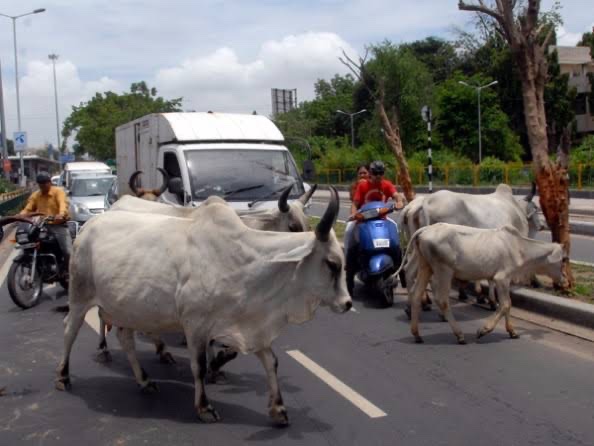
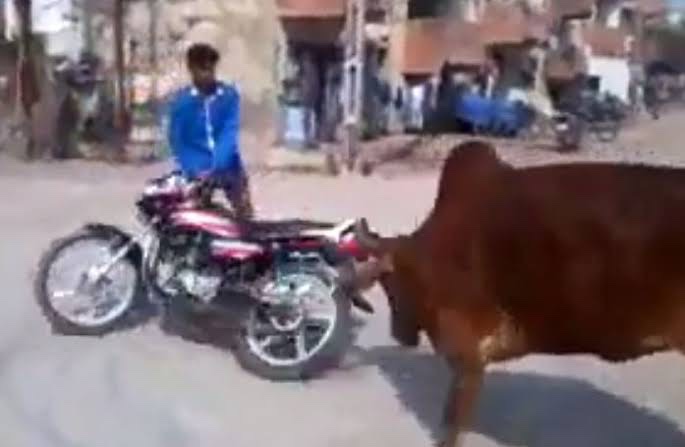
બાઇક ને અથડાતી ગાય

રસ્તા પર ગાયોનું ધણ


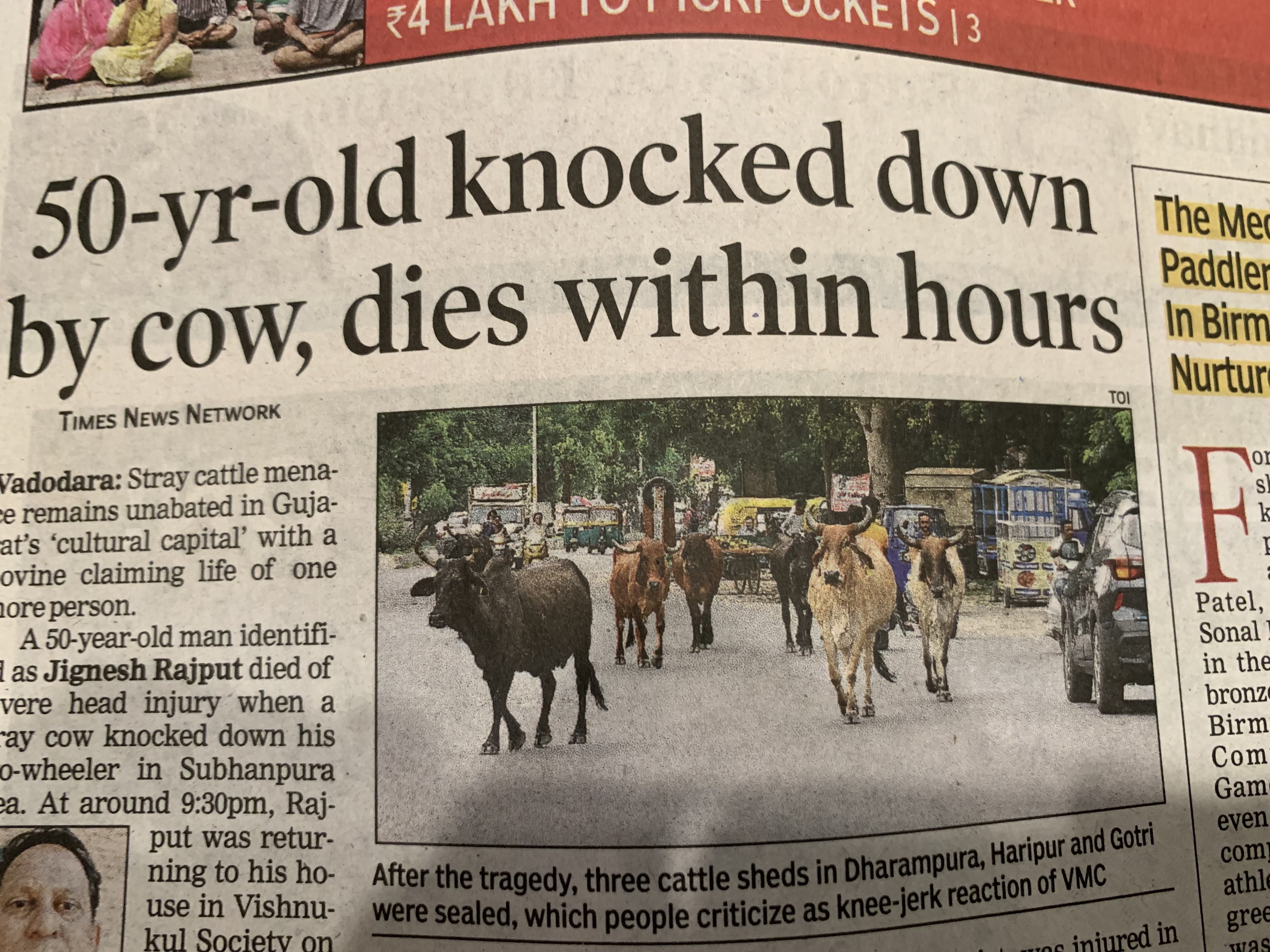
૫૦ વર્ષની એક વ્યક્તિ નો રસ્તામાં રખડતી ગાયોએ લીધેલો ભોગ

શું તમને હૈયાધારણ છે કે આવા રસ્તાઓ પર પણ આપણે, આપણિ સ્ત્રિઓ, આપણાં બાળકો અને આપણા સ્વજનો સુરક્ષિત છે ?

મેં એક દીવસ બહુજ ચિવટથી સર્વે કર્યો. ફક્ત ૧૦ % લોકોજ હેલ્મેટ પહેરે છે. બાકીના બધાજ ભગવાન ભરોસે સ્કુટર / બાઇક હંકારે છે. સ્કુટર પર ત્રણ ચાર સવારી તો સામાન્ય છે. આમાં નાના ભુલકાં, સ્ત્રિઓ અને ર્વુદ્ધો પણ ખરા. પોલીસ પણ આંખ  આડા કાન કરે છે.

આ ફોટાતો થોડાકજ આપ્યા છે. પણ હકીકતમાં કોઇ પણ રસ્તો ક્યારેય રસ્તામાં રઝળતી ગાયો, અને એમને રસ્તા વચ્ચોવચ બેફામ તગડી જતા બાઇક સવારો વગર તો ક્યારેય નથી હોતો. આ ઉપરાંત, હમણા રસ્તાઓ પર પડતા ખાડાઓએ (ભુવા) તો લોકોની લાચારી ખુબ વધારી દીધી છે.

જો તમને ખાતરી થઇ હોય કે હવે તો આપણા રસ્તાઓ ની અરાજકતા હદ વટાવી ગઇ છે, કંઇક કરવુંજ પડશે, તો જનતા-જર્નાદનને ઢંઢોળવા માટે આ વીકટ સમસ્યાને સોશ્યલ મીડીયા પર વહેતી કરો.

રસ્તામાં રઝળતી આપણી ઘેનુકાઓ

જ્યારે ઠેર ઠેર રસ્તામા રઝળતી ગાયોને જોઉ છું ત્યારે મન ખીન્ન થઇ જાય છે. ક્રષ્ણના ગોવાળીયા અને ત્યારના ગોપાલકોની યાદ આવી જાય છે. કેવું હતું ગૌમાતા નુ જતન ? અને આજે એ મહામુલા ગોધનને રસ્તામાં ચારા માટે ફાંફા મારતું જોઉં છું ત્યારે એમની આ દશા કરનાર વેપારીયો ઉપર આક્રોષ આવે છે.

આપણી સવાર જેના અર્મુત જેવા દુધથી થાય છે તેની આ દુર્દશા ? શું આજ ગૌમાતા  માટે કવિહ્રદયમાંથી આ અણમોલ શબ્દો સરી પડ્યા હશે : “ઘેનુકાની આંખ્યોમાં જોયા મેં શ્યામ, એને રૂવે રૂવે વાંસળી વાગે” ? શું આ ગીત ગાતી વખતે પુરૂષોત્તમ ઉપાધ્યાય ક્યારેક એમની ઉપેક્ષા થી દ્રવી પડ્યા નહીં હોય ?

રોજ રોજ છાપાંમાં સમાચાર વાંચીયે છીએ કે રખડતી ગાયને અથડાવાથી ગાડી ઉથલી પડી અને કોઇકનું મોત થયું, એમાં નાના છોકરાં, વયસ્કો અને અપંગ લોકો પણ ખરા. ત્યારે આપણે રખડતી ગાયો ને વગોવીએ છીયે. પણ એ મુગા પ્રાણીનો શું વાંક ? એ તો એના ખોરાકની શોધમા રખડતી હોય છે.

ખરો ગુનેહગાર તો એનો માલીક છે, જે આખો દિવસ બીજા કામમાં વ્યસ્ત હોય છે, ગાયો ને રસ્તા ઉપર ચરવા માટે છોડી મુકે છે, સાંજે મોટર સાયકલ પર આવી ને આડેધડ તગડી જાય છે અને દોહીને એનુ દૂધ વેચી દે છે, આપણે એને માણીયે છીયે ત્યારે આપણી સવાર થાય છે. આ તે કેવી વીડંબણા ?

છાપાંમાં મોટી હેડલાઇન વાળા મંત્રીઓના નીવેદનો આવ્યા કરે છે કે ગાયોને રસ્તા ઉપર છોડી મુકનાર માલીકોને સજા થશે અને આવી ગાયોને પકડી ને પુરી દેવામાં આવશે. પણ ગાયો તો રસ્તામાં આવ્યાજ કરે છે, લોકો આ ગાયોની અડફટમાં આવીને મર્યા જ કરે છે. કદાચ્ ગાયોના માલીકોએ કંઇ શોર્ટ કટ ખોળી કાડ્યો હશે. ગમે તે હોય પણ આ દુષણ તો દૂર કરવુંજ પડે.

દુધના એ અઠંગ વેપારીયોનો બહીષ્કાર ન કરી શકાય ? આ સારાય કૌભાંડ પાછળ રહેલા સડેલા તંત્રને ખુલ્લુ ન પાડી શકાય ?

મારી પાસે આનો કોઇ સચોટ ઉકેલ નથી.

કોઇ માઇનો લાલ આ ઘુંચવાયેલું કોકડું ઉકેલવાનું  બીડું જરૂર ઝડપી લેશે એ આશા  સાથે વીરમું છું.


Government of the people, by the people, for the people

In his famous “The Gettysburg Address” US President Abraham Lincoln inunciated democracy in these immortal words : “Government of the people, by the people, for the people”. Has this dream of democracy become a reality ? Unfortunately, we are far away from realising this great vision of a true democracy. We have still government run by the elected representatives of the people. People have no control over them once they are elected. Can we call it government of the people, by the people, for the people ? Unfortunately, answer is in the negative.

The tragedy of democracy is the silent majority which does not belong to any political party. Bulk of them are not vocal and do not speak out on any important issue. Their unexpressed views are just ignored. All decisions are taken by the majority in the legislature. Fact remains that they represent majority of citizens elected on the basis of their views at the time of election. During the term of the elected legislature several controversial issues might come up. People’s views might not coincide with the stand taken by the representatives elected by them. However, decisions on such issues are taken assuming that elected representatives reflect the views of their electorate. No conscious effort is made to ascertain their views and mould the decision in accordance with their views.

In a true functioning democracy, it should be possible for the majority of the electorate to influence the decision. Constitution (Amendment) Bill, about voter’s right to recall elected representatives, was introduced in Loksabha by C. K. Chandrappan in 1974. Atal Bihari Bajpai supported this but the bill did not pass. Shri Jayprakash Narayan and Anna Hazare also suggested adoption of right to recall. Right to recall laws are there in US, Canada, Japan, UK, Switzerland, Venezuela, Peru and Ecuador. Recently a corrupt MP of UK Fiona Onasanya was removed by recall.

A recall election is typically a process by which voters seek to remove their elected representatives before their term is completed. It has been in place in Canada’s Legislative Assembly of British Columbia since 1995. Voters can petition to have their parliamentary representative removed from office even if he is the premier, with a by-election ensuing soon after. In the United States, the states of Alaska, Georgia, Kansas, Minnesota, Montana, Rhode Island and Washington allow for recall on specific grounds such as misconduct or malfeasance.

In absence of a right to recall, it is essential to find some instrumentality to build up the pressure of public opinion, especially on controversial issues where many divergent views are held. Recently, former judges provided an excellent example of such a device by issuing a strongly worded statement against sitting judges making public statement. The maximum they are supposed to have gone so far was making obitar dicta which is not legally binding. We need more such enlightened groups of citizens to jointly express their views on important issues to build public opinion to influence the decision making bodies. The root cause of a difunctional democracy is the large mass of silent majority. In order to make democracy as “of the people, by the people, for the people’ we have to find ways to sensitise this large mass of people, such that they are able to make the government more responsive to their views on important policy decisions.

This anomaly, sometimes, takes a dangerous form when the differences between the government and the people become intolerable and people are forced to take recourse to violent representations as happened in Shri Lanka. We have to find a safety valve in the system to steam out such extreme mismatch between government and the people .

Until such time as we find a panacea for our limping democracy, at times in distress, we need a network of institutions manned by eminent professionals and enlightened citizens respected by people at large who do not owe alliance to any political party, religion, vested interest or any ethnic group but are pure Indians whose only concern, when they express their views on any issue, is the interest of the country and nothing else. We do have some such balanced institutions with men of honour and integrity. We need many more and we need to sensitise them in playing a more decisive role in moulding public policies.

Dichotomy of Criminal Justice

Universal principle of Criminal Justice is that a person is innocent till found guilty. It means no one’s freedom should be abridged till he is charged and convicted by a competent court. Indian prisons have colossal number of under-trials who await their trials, but are languishing in jails. They are tortured, not allowed to meet their family members and generally treated as criminals.

India is perhaps one of the few countries where undertrials are worse off than those convicted. As of 2019, undertrial prisoners form 70% of the prison population in India. A majority of undertrials, about 65%, are from scheduled tribes, other backward classes, marginalised and vulnerable groups having no means to fight to get bail.

Several judgements have upheld the right of undertrials to a speedy trial, legal aid etc. But undertrial prisoners continue to increase unabated. The reason for this inhuman state of affairs is the gross disregard of the legal position and judicial decisions by police authorities, lower judiciary and prison administration. Thus we need to focus on effective implementation of legal framework to ameliorate the misery of undertrials in India.

First step in this direction is to mandate bail in all cases in which the history of the undertrial does not contain any hard-core criminal record or prima facie proof of involvement in terror attacks.

Let us take few tragic cases in which a person was held in jail for many years as under trial merely on suspicion for a long time and found innocent.

The most tragic case of Kobad Ghandi. A product of Doon School, St Xavier’s College, Mumbai, a Chartered Accountant from UK spent 10 years in prison before he was found innocent and acquitted.

Mohammad Ali Bhat, a shawl trader in Nepal, just 25, was kept in jail in Delhi and Rajasthan as accused in Lajpat Nagar and Samlethi blast cases for 22 years before he was declared innocent by Rajasthan High Court.

Police in Bijnor, UP, imprisoned Bala Singh for a murder he did not commit even though his mother a daily wage labourer pleaded that police was mistaking Bala for her other son. He was set free after 10 years.

There are many innocent persons who were kept in jail for a long time pending their trial and who were found innocent. In most democracies, people .are jailed only after conviction. But in India, jails are packed with undertrials more than the convicts; people imprisoned even before they have been proven guilty. They are freed only when they are proved not guilty.

Making a scathing observation forty years ago, the Supreme Court had said the high prevalence of undertrials in jail is crying shame of the judicial system as it permits imprisonment of people for long periods even without trial commencing in many cases.

Except in cases in which the prisoner has a record of a hard core criminal, bail must be made automatic after 30 days. Breach of this mandate should be considered a criminal offence leading to appropriate punishment.

India of Our Dreams

I had a dear friend since college days, a devout Muslim.  we used to prepare for examinations at my home and I used to visit his place often and dine with his family. Both our families loved our friendship. My friend’s family had a unique system of entire family dinning in the same plate, entire family sitting on floor around a  large thali. I enjoyed my dinner with them. But more than the dinner I loved  the unforgettable  unique sense of togetherness. He is no more. I miss him and miss that togetherness. This is just one example from my own life. But if you look across the whole of India, there must be myriads of such friendships crossing the man-made boundaries of what we know as casts, creed, communities, and ethnic groups.

Our common folk, which we call our India, is intermingled like sugar and milk. There is not even a remote sense of divide in our day-today-lives. Then, how come this quiet companionship is suddenly turned into a communal outburst just because of an irresponsible person showing disrespect to the religious deity of another religion ? It is, despite the silent ones who do not speak out and suffer, but, unfortunately, because of some few who are the beneficiaries. They create and fan such frenzy. The media which, in search of sensationalism and viewership ratings goes on showing the visuals of same violence again and again, adds fuel to fire.

But we do know the unshakable ethnic mix of people at large in this great country which has stood the test of time. This multi-cultural, multi-lingual, and multi-religious country is perhaps the only one of its kind in the world.

But when such utterances come from a responsible person of the ruling party, people are bound to be upset and strong reaction is natural. But it does not justify a rowdy violent outburst, such that it takes innocent lives. It hurts the common men of all persuasions. It is heartening to note that the most respected among Muslims, the clergy, have condemned violence in the name of the prophet who preached nonviolence and peace all through out his life and appealed people to stop it.

But unfortunately, there are some who want to fish in the troubled waters and fan religious hatred to promote their personal political ambitions. Should we fall a prey to them ?

As a country which stands on the threshold of a New India, removing all obstacles in our brisk journey to modernity, we must guard against such aberrations, to continue our unstoppable journey into the future.

We must, of course, ruthlessly punish,   any attempts by whomsoever, irrespective of his or her political or social celebrity status, to disturb the invaluable equilibrium of our social-mix, not by unabashed violence hurting innocents and destroying public property, but by strong, just and fair arm of the LAW.

But let no one distract us from building modern India of our dreams by our collective endevour.

Wither India ?


History of India, since Ashoka and earlier is that of a disunited country, brave kings fighting among themselves, invaded by Greeks, Persians and Moguls later by British, French and Portuguese who came as traders and then established colonies. All these invaders looted our country.

First to see the need for unity was Chandra Gupta Maurya and his decendent Ashoka whose Ashok Stambh is the symbol of modern democratic India.

As the story goes Moguls destroyed our religious places and established mosques. Moguls did forced conversions, others incentivized conversions.

Social architecture of India of today is the result of ethnic mix left by these invaders. But the fact remains that this ethnic mix is Indian at the roots. Each one of them is Indian First and Indian Last. This was proved when all Indians united under the leadership of Gandhiji to fight the British for independence.

India has now embarked on a march towards modernity in all areas. This is achievable only if India remains united and is not entangled in the dark episodes of communal strife.

Is it wise to rewrite past history and reclaim all shrines even at the cost of colossal loss of innocent lives ? Present day Indians, belonging to any ethnic group, have nothing to do with what happened hundreds of years ago.

One ugly feature of modern democratic India is vote bank politics. If we do not resist this ugly attempt to divide us once again we will be thrown back Into the dark days of disunity and stop us from reaching our destiny in the comity of nations.

We must bear in mind that any attempt to rewrite history is only at the cost of colossal loss of innocent human beings. Can we redraw the map of India as it existed under Ashoka ? what is happening with Russia trying to regain its lost possession Ukraine or if China attempts to annex Taiwan ?

Let us unite and build a strong India, militarily, economically, politically and socially, such that no power on earth can ever dream of invading us.